
In the Age of AI, Do Children Still Need to Learn Drawing?
If AI can generate images, do children still need to learn drawing? ET Art Studio discusses art education, creativity, and future-ready abilities.
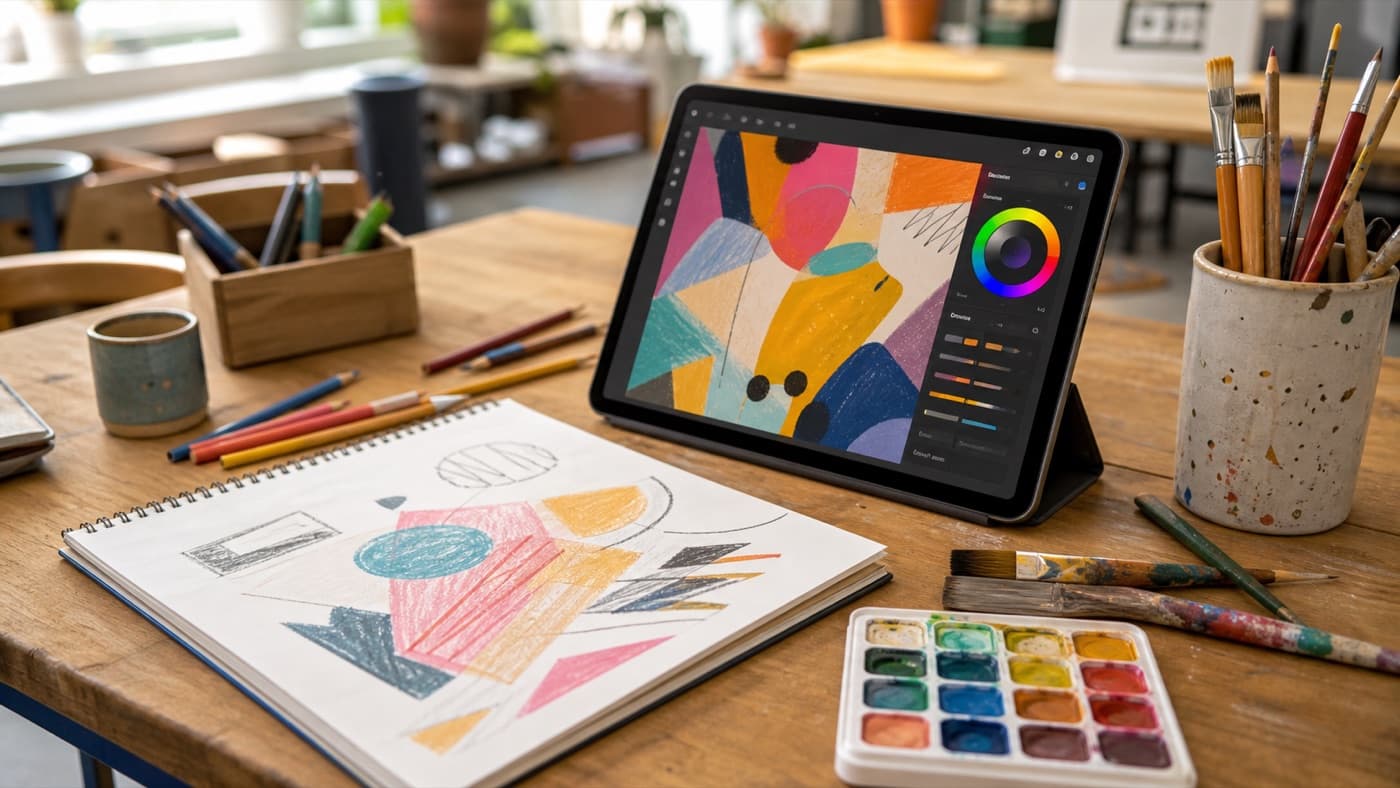
Today, with one sentence, AI can generate an image. Forest castles, space cats, future cities, oil-painting-style portraits can appear in seconds.
So some parents ask: If machines can already draw, do children still need to learn drawing?
This question is practical and important.
At ET Art Studio, we believe that the more advanced AI becomes, the more children need to truly understand art. In the future, what will be rare is not only people who can make images, but people who can observe, ask questions, judge, and express.
AI can generate images, but children need to generate ideas
AI can create pictures from prompts, but where do the prompts come from?
A child with ideas may say: I want to draw a library floating above rain clouds. The books inside glow and only open at night.
A child with little experience in expression may only say: Draw a nice castle.
That is the difference.
Art learning trains more than the hand holding a pencil. It trains the ability to form images in the mind. When children learn to observe life, collect feelings, organize stories, choose colors, and judge the focus of an image, these abilities affect how they ask AI questions and how they evaluate whether AI's result is good.
Drawing ability affects aesthetic judgment
AI can offer many images, but that does not mean every image is good.
Is the composition clear?
Are the colors harmonious?
Is the figure's movement natural?
Does the picture have emotion?
Do the details serve the theme?
All of these require aesthetic judgment.
If children only receive finished images for a long time and have never drawn, revised, or failed by hand, it is hard for them to understand why an image works. It is also hard for them to give more accurate directions for improvement.
Drawing helps children understand that beauty is not accidental. Behind it are choices, structure, and priorities.
The experience of the hand cannot be fully replaced
Children hold pencils, mix colors, cut and paste, knead paper, shape clay, lay down watercolor, and revise lines. These small actions build a connection between body and mind.
When children discover that line pressure changes emotion, layered colors can become muddy, wet paper can wrinkle, and too much erasing can damage the page, their understanding of materials becomes concrete.
This concrete experience cannot be fully replaced by a screen.
Real materials give children feedback: some things cannot be rushed, some effects need waiting, and some mistakes can become new ideas. Through this process, children learn patience, judgment, and adjustment.
AI can be a tool, but it should not replace childhood expression
We do not need to see AI as an enemy.
Children in the future may use brushes, tablets, cameras, and AI tools at the same time. The key is that they should first have their own feelings and judgment before using tools.
If a child knows what they want to express, AI can help expand possibilities. If a child has no idea what they want to express, more tools can make them feel more lost.
So the focus of art education is not to compete with AI on speed. It is to help children become users, creators, and judges with stronger ideas.
What does ET Art Studio hope children learn?
At ET Art Studio, children learn drawing for more than completing one artwork.
We hope they learn to:
- Observe the real world, not only screens.
- Turn feelings into images.
- Find new methods through mistakes.
- Understand color, structure, and composition.
- Respect their own ideas while understanding others' suggestions.
- Keep creativity even as tools change.
These abilities will only become more important in the age of AI.
The future needs children with ideas
AI can generate images, but it cannot live a child's childhood for them. It cannot observe a leaf for them, remember a trip for them, express a moment of sadness for them, or draw a world that only that child would imagine in that way.
So yes, children still need to learn drawing.
Not because machines cannot draw, but because children need drawing to know themselves, understand the world, and learn to clearly express what is inside them.
Follow ET Art Studio for more content about children's art, technology and art, and creativity development. You are also welcome to book a trial class and see how children begin creating in their own way.