
The New Era of 3D Creation: How AI Tools Bring Kids' Imagination to Life
From text description to 3D model in just seconds — AI technology is reshaping the world of 3D creation. What does this mean for young creators? Let's explore this exciting frontier of digital art together.
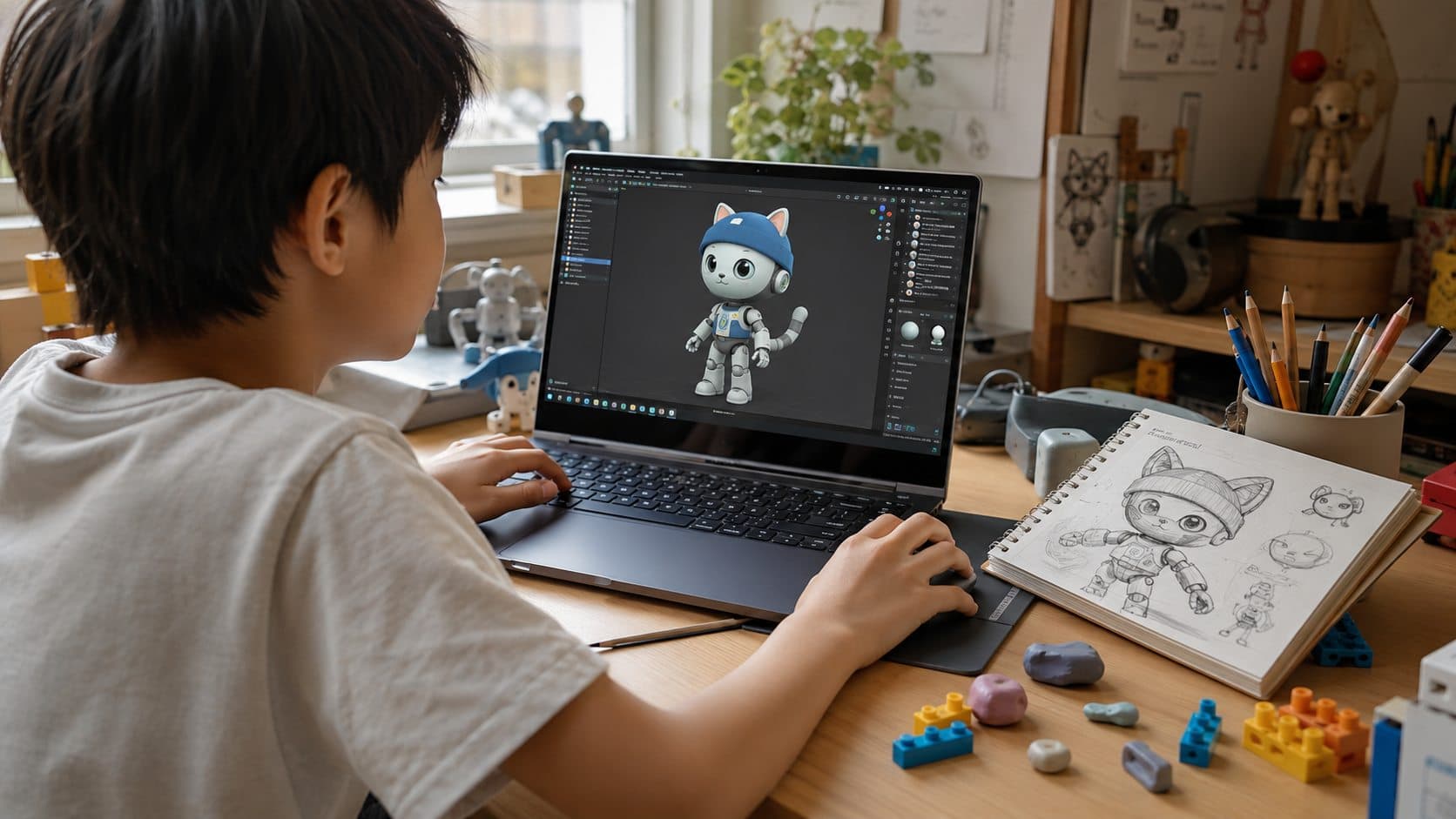
Do you remember the wonder in your child's eyes when they first saw 3D animation? Those lifelike characters and intricate scenes seemed to possess an almost magical appeal. Now, this "magic" is becoming more accessible than ever.
This week brought exciting news from the 3D creation world: AI tools can now transform simple text descriptions or photos into game-ready 3D models in just seconds. The launch of Spline V2 introduced a redesigned 3D editor with AI agents, making the creative process more intuitive and efficient than ever before.
A New Outlet for Imagination
What does this mean for our young creators? Imagine a 12-year-old who can use simple text — "a robot cat wearing a blue hat" — and instantly see their idea transformed into a three-dimensional character. No complex modeling skills required, no expensive software needed. The barrier to creativity has never been lower.
This technological revolution isn't just about better tools; it's about a shift in mindset. Children can focus on "what do I want to create?" rather than "how can I possibly make this?" This brings us back to the core of art education — nurturing creativity and expression.
The Leap from Flat to Spatial Thinking
Traditional art education often begins with flat surfaces — drawing, sketching, color work. 3D creation demands that children think from multiple angles: shape, volume, lighting, texture. This development of spatial thinking provides excellent training for both imagination and logical reasoning.
What's even more fascinating is that AI-assisted 3D creation is itself a journey of discovery. Children quickly learn that the same description might yield completely different results, encouraging them to experiment and refine their ideas, learning to express their creativity with greater precision along the way.
How Can Parents Help?
As parents, we don't need to rush our children into mastering the latest AI tools. Instead, we should protect and nurture their curiosity. Start simple: observe three-dimensional objects in daily life with your child, discussing their shapes, colors, and textures; encourage them to create simple 3D works with clay or building blocks; when watching animated movies, chat about how characters come "alive."
Technology evolves rapidly, but the foundation of creativity remains rooted in observation, thinking, and expression. Let's accompany our children in this age of endless possibilities, helping them find their own creative voice in the digital world.